Fire doors in rented properties: What landlords need to know
Posted September 16th 2026

Fire doors are an important safety feature and when properly installed and maintained, they help slow the spread of fire and smoke, protect escape routes and give people more time to leave a building safely.
But does every rented property need them? And what should landlords be checking? In this article we explore when fire doors are needed in rented properties, what landlords should check and how to deal with faults to help keep tenants safe.
What does a fire door do?
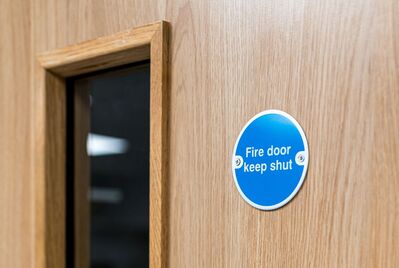
A fire door is designed to resist fire and smoke for a set period when closed. It works as a complete doorset, including the door, frame, hinges, seals and any glazing or self-closing device.
If it is damaged, poorly fitted or wedged open, it may not provide the protection it was designed for. The Government describes fire doors as one of the most important ways to protect escape routes in blocks of flats.
Does every rented property need fire doors?
There is no blanket rule saying that every internal door in every rented home must be a fire door.
What is required depends on the type, age, layout and use of the property. Fire doors may be needed under Building Regulations, as part of a protected escape route, under an HMO or property licence, or following a fire-risk or housing-safety assessment.
The requirements can therefore be different for a single-family house, an HMO, a converted property and a purpose-built block of flats. If you are unsure, check with your local authority, the building’s Responsible Person or a competent fire-safety professional.
What are the rules for blocks of flats?
The Fire Safety (England) Regulations 2022 apply to buildings containing two or more homes with shared areas through which residents would escape.
The Responsible Person must tell residents to:
- keep fire doors shut when they are not in use;
- avoid tampering with self-closing devices; and
- report any damage or faults straight away.
In buildings where the top storey is more than 11 metres above ground level, the Responsible Person must use best endeavours to check flat entrance fire doors at least once every 12 months. Fire doors in communal areas must be checked at least every three months.
These duties do not automatically fall to an individual leasehold landlord. However, landlords should know who the Responsible Person is, cooperate with access requests and make sure their tenants understand the guidance.
What should you look for?
Regular visual checks can help identify obvious problems. The Government’s fire-door checking guidance recommends looking for:
- damage to the door, frame, glazing or letterbox;
- loose or missing screws and damaged hinges;
- damaged or painted-over seals, where fitted;
- gaps around the door that appear too large; and
- a self-closer that does not shut the door fully into its frame.
Never wedge or prop open a fire door. Tenants should also be asked to report faults promptly and not disconnect self-closing devices.
These simple checks do not replace a fire-risk assessment or professional inspection. An older door is not automatically unsafe because it lacks modern labels, certification or seals; its age, condition and suitability for the building all need to be considered.
What if you spot a problem?
Act promptly if a fire door is damaged or fails to close correctly. Avoid making alterations yourself, as changing the glazing, letterbox, locks, seals or frame can affect how the complete doorset performs.
Repairs and replacements should be completed by someone with the right skills and experience. Government fire-safety guidance for sleeping accommodation says that fire doors and other safety measures must be kept in effective working order.
Fire doors only work when they are suitable, properly fitted, kept closed and maintained. Landlords should understand what their property requires, deal with faults quickly and seek professional advice if anything is unclear.
This article provides general information for landlords in England and is not legal or fire-safety advice. Different rules apply in Scotland, Wales and Northern Ireland.